If you have a box of old Disney and Pixar Cars toys, identifying the character is easy.
Identifying the exact release can be much harder.
For collectors, that difference matters.
Two Lightning McQueen toys can look nearly identical at first glance while coming from different releases.
Here is a practical identification process.
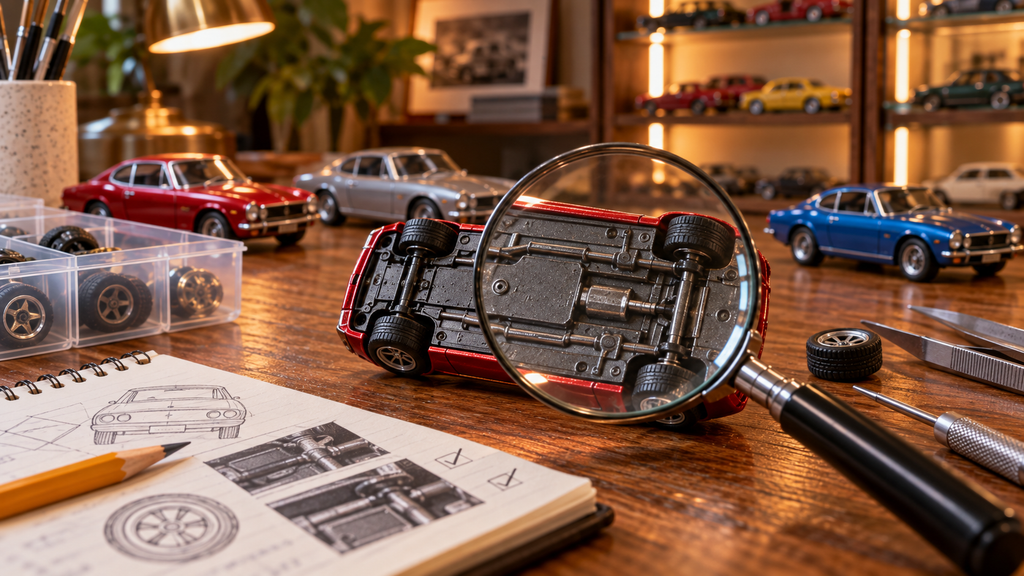
Step 1: Photograph the Toy Before Researching
Take clear photographs of:
- front
- left side
- right side
- rear
- roof
- underside
- wheels
- packaging
Good photographs make side-by-side comparison much easier.
Step 2: Check the Underside
Turn the vehicle over.
Look for manufacturer information, copyright markings, product identifiers, production markings and manufacturing country.
Photograph everything.
Do not assume a copyright year is necessarily the exact year your individual toy was purchased.
Step 3: Compare the Eyes and Expression
Cars characters have faces, which gives collectors another useful identification point.
Look carefully at:
- eye direction
- eyelid shape
- smile
- mouth
- expression
A different expression can indicate another release.
Step 4: Examine Decals and Graphics
For racing characters especially, inspect every sponsor graphic and number.
Check:
- placement
- size
- color
- missing or added graphics
- outline differences
- finish
Use photographs rather than memory.
Step 5: Check the Wheels
Wheel designs can help distinguish releases.
Look at:
- spoke pattern
- rim color
- tire design
- wheel width
- finish
Step 6: Identify Accessories
Some Cars releases include extra parts or represent a particular scene.
Accessories can be crucial when distinguishing one version from another.
Do not throw away small accessories before identifying the set.
Step 7: Study the Packaging
If the toy remains packaged, the card can provide a large amount of information.
Photograph both sides.
Look for:
- series name
- character name
- product number
- assortment information
- artwork style
- checklist
- promotional text
- other characters shown
Step 8: Check Production Differences
Collectors may distinguish releases manufactured in different locations or periods.
Treat these differences carefully.
A different manufacturing location does not automatically mean rare.
It is simply another identification clue.
Step 9: Look for Documented Variations
A genuine variation should ideally be something that other collectors can consistently identify.
Be skeptical of claims such as:
“Only one exists.”
“Ultra rare error.”
“Prototype.”
“Factory mistake worth thousands.”
Extraordinary claims require good evidence.
Step 10: Compare the Correct Version
When researching value, do not compare:
a loose example with a pristine packaged example,
a common reissue with an early release,
or one variation with a different variation.
The closer the comparison, the more meaningful the price research becomes.
Rare Does Not Always Mean Expensive
A collectible can be genuinely difficult to find without having a large buyer base.
Value requires both scarcity and demand.
Build Your Identification Record
For each toy in your collection, record:
Character:
Manufacturer:
Series:
Approximate release:
Product code:
Production markings:
Manufacturing country:
Packaging:
Condition:
Known variation:
Notes:
This simple record can save enormous time later.
Continue Researching
Read our Disney Cars Diecast Value Guide for valuation methodology.
See Most Valuable Disney Cars Toys for factors that can affect collector demand.
See our Mater Diecast Value Guide for a practical example of identifying releases using Mattel numbers such as L5253, DHD64 and JJW66.
If you are trying to decode a product number, see our Disney Cars Mattel Number Guide.
9 thoughts on “How to Identify Rare Disney Cars Diecasts”